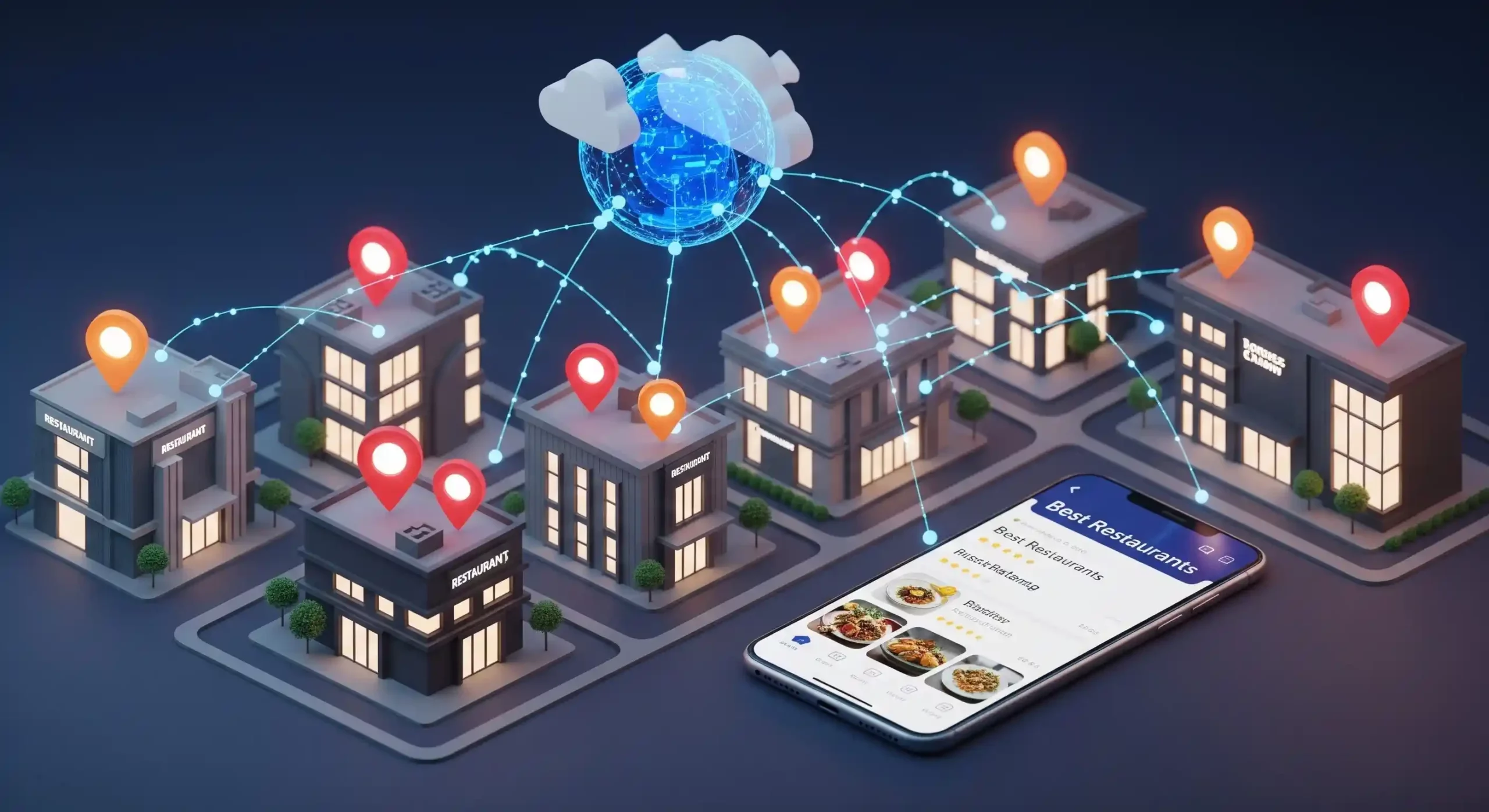
Here’s the reality for most multi-location restaurant marketers: you’re expected to drive growth across 50, 100, or 200+ locations with a team that could fit in a booth.
You don’t have time to manually segment audiences, write personalized emails for every customer type, or trigger perfectly-timed campaigns based on guest behaviour. But that’s exactly what it takes to compete in 2026.
Enter marketing automation.
The numbers make the case: Email marketing specifically delivers $36 for every $1 invested, per Litmus. And Salesforce reports that businesses using automation see a 34% increase in revenue and 25% higher marketing ROI.
This isn’t about replacing your team, it’s about multiplying what they can do.
What Is Restaurant Marketing Automation?
Marketing automation uses software to trigger personalized messages based on guest behaviour without manual intervention.
Instead of blasting the same email to your entire database, automation lets you send a welcome series when someone joins your loyalty program, trigger a win-back offer when a regular guest hasn’t visited in 30 days, request a review 2 hours after someone dines in, and remind guests to re-order their favourite takeout meal.
Each message is triggered by a specific action (or inaction) and personalized based on that guest’s history. It’s one-to-one marketing at scale.
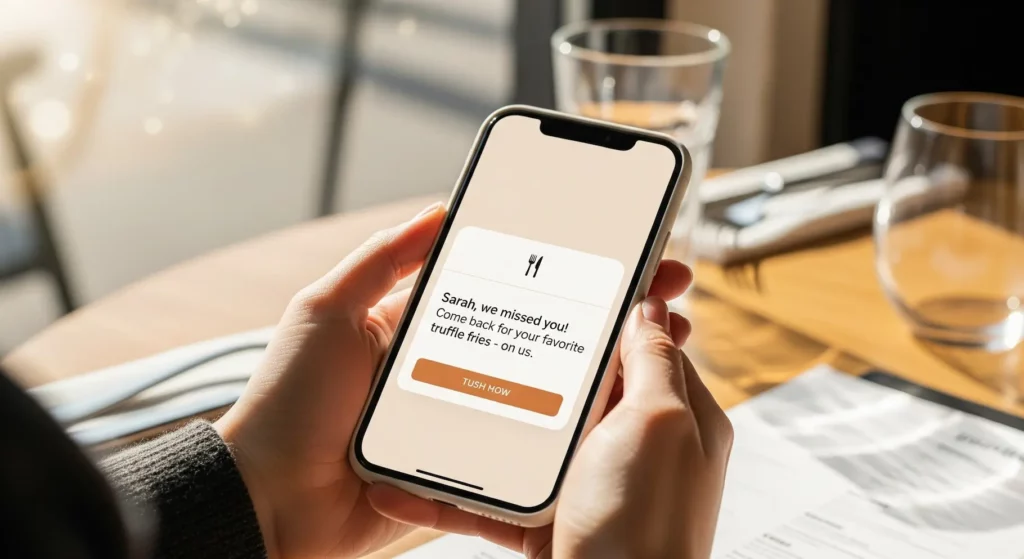
Why does this matter? Because 71% of consumers expect personalized experiences and 76% get frustrated when they don’t get them, according to HubSpot. Generic batch-and-blast emails don’t cut it anymore.
Why Multi-Location Restaurants Need Marketing Automation
If you’re managing marketing for a regional or national restaurant brand, automation isn’t a nice-to-have. It’s how you survive.
The pressure is real:
The National Restaurant Association projects restaurant industry sales will reach $1.5 trillion in 2025, but competition is intensifying.
48% of restaurant operators expect more intense competition this year compared to 2024. Meanwhile, 96% of full-service restaurants cited labour costs as a major challenge in 2024, per the NRA.
Your competition is using automation to personalize at scale: if you’re not, you’re losing share.
What automation solves for multi-location brands:
| Challenge | How Automation Helps |
| Small team, big footprint | Set up once, run across all locations automatically |
| Inconsistent local marketing | Centralized campaigns with location-specific personalization |
| No time for segmentation | Behaviour-based triggers do the segmenting for you |
| Can’t prove marketing ROI | Automated campaigns are trackable down to the dollar |
| Guests slipping away | Win-back flows catch at-risk customers before they lapse |
The brands winning in 2026 aren’t doing more; they’re automating what matters, so their teams can focus on strategy, not execution.
7 Restaurant Marketing Automations That Drive Revenue
Not all automations are created equal. These seven deliver the highest impact for multi-location restaurant brands.
1. Welcome Series for New Loyalty Members
Trigger: Guest signs up for loyalty program or email list
Why it works: First impressions matter. 78% of diners say they’re more inclined to choose a restaurant that offers rewards, even if it’s less conveniently located. And 46% of restaurants plan to update or enhance their loyalty programs in 2025.
What to include: Thank them for joining, explain how the loyalty program works, include a first-visit incentive (free side, % off, bonus points), and introduce your brand story.
Multi-location tip: Personalize by nearest location: include address, hours, and a map link.
2. Lapsed Guest Win-Back Campaigns
Trigger: Guest hasn’t ordered or visited in 30, 60, or 90 days
Why it works: It costs 5x more to acquire a new customer than to retain an existing one. Win-back automations catch guests before they forget about you.
What to include: “We miss you” messaging, personalized offer based on their past orders, and an easy path back (direct link to order online or reserve a table).
Multi-location tip: Segment by location and adjust timing based on typical visit frequency for that market.
3. Post-Visit Review Requests
Trigger: 2-4 hours after a dine-in visit or order completion
Why it works: Reviews are a ranking factor for local SEO. Automated requests generate a steady flow of fresh reviews across all locations—critical when 90% of guests research restaurants online before visiting.
What to include: Simple ask (“How was your visit?”), direct link to Google review page (location-specific), and an option to provide private feedback if something went wrong.
Multi-location tip: Route negative feedback to location managers for follow-up before it becomes a public review.
4. Birthday & Anniversary Offers
Trigger: Guest’s birthday or loyalty program anniversary approaches
Why it works: These feel personal and drive incremental visits. Birthday emails have some of the highest redemption rates of any campaign type.
What to include: Personalized greeting, free item or special discount, and clear expiration date to drive urgency.
Multi-location tip: Allow redemption at any location to maximize convenience.
5. Abandoned Cart Recovery
Trigger: Guest adds items to online order but doesn’t complete checkout
Why it works: Abandoned cart emails have a 55% conversion rate. 168% higher than the average marketing email, according to Barilliance. That’s revenue you’d otherwise lose.
What to include: Reminder of what’s in their cart, easy link to complete the order, and optional small incentive to close the deal (free delivery, bonus points).
6. Location-Based Promotions
Trigger: Guest is near a location (geofencing) or visits a specific market
Why it works: Right message, right place, right time. Location-triggered SMS or push notifications drive immediate action, especially relevant when 57% of adults now use mobile ordering, per the National Restaurant Association.
What to include: Time-sensitive offer (“Lunch special ends at 2 pm”), proximity messaging (“You’re 5 minutes away…”), and clear CTA with directions or order link.
Multi-location tip: Requires solid location data infrastructure; make sure your guest profiles are tied to preferred locations.
7. Re-Order Reminders
Trigger: Set interval after a takeout or delivery order (7, 14, or 21 days)
Why it works: Automated emails drive 37% of all email-generated sales despite making up only 2% of email volume, according to Litmus. Re-order reminders turn one-time buyers into repeat customers.
What to include: “Ready for another [previous order item]?”, one-click re-order link, and suggest complementary items (“Add a side this time?”).
How to Get Started with Restaurant Marketing Automation
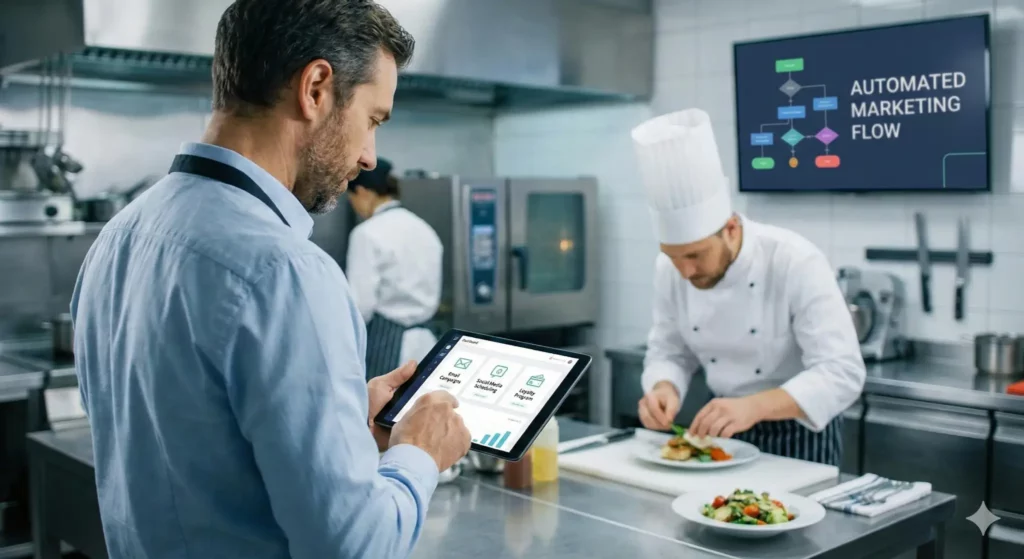
You don’t need to launch all seven automations at once. Start with the highest-impact, lowest-complexity options and build from there.
Phase 1: Foundation
Welcome series (captures new guests immediately), post-visit review requests (builds local SEO momentum), birthday offers (easy win, high redemption)
Phase 2: Retention
Lapsed guest win-back (requires visit frequency data), re-order reminders (requires order history data)
Phase 3: Advanced
Abandoned cart recovery (requires online ordering integration), location-based promotions (requires geofencing and clean location data)
What you need to succeed:
Your automation is only as good as your data. You need a single view of each guest across locations, channels, and touchpoints.
Choose an email/SMS platform that integrates with your POS, loyalty program, and online ordering system. Track open rates, click rates, redemption rates, and revenue attributed to each automation.
For multi-location brands: The challenge isn’t building one automation, it’s building systems that scale across 50, 100, or 200+ locations while maintaining brand consistency.
That’s where most teams get stuck.
FAQ
What is restaurant marketing automation?
Restaurant marketing automation uses software to send personalized messages to guests based on their behaviour—like joining your loyalty program, completing an order, or not visiting for a while. It runs automatically, so your team doesn’t have to manually trigger every campaign.
How much does restaurant marketing automation cost?
Costs vary based on your platform, list size, and complexity. Most restaurant-focused platforms charge $200-$1,000+/month. The ROI typically justifies the investment: brands see an average $5.44 return for every $1 spent.
What’s the ROI of marketing automation for restaurants?
On average, restaurant brands see $5.44 return for every $1 spent on marketing automation. 76% of companies see positive ROI within the first year.
What automations should restaurants start with?
Start with welcome series, post-visit review requests, and birthday offers. These are high-impact, low-complexity, and don’t require advanced data infrastructure.
Can marketing automation work for multi-location restaurants?
Yes, and it’s especially valuable for multi-location brands. Automation lets you personalize at scale, maintain brand consistency across locations, and drive measurable results without adding headcount.
Scale Your Restaurant Marketing
Marketing automation turns one-to-one personalization from an aspiration into reality. For multi-location restaurant brands with lean teams, it’s the difference between keeping up and falling behind.
The brands winning in 2026 aren’t doing more; they’re automating what matters.
Need help building automation that scales across your locations?
At Hook + Ladder, we help multi-location restaurant brands implement marketing systems that drive revenue without adding headcount.
From email and SMS automation to local SEO and franchise development, we work as an extension of your team.